The Music Effect: How Sound Shapes Focus, Memory, and Emotions
Sound is the background of almost every day. The right sound can help you drop into deep focus, remember more, and calm your nervous system. The wrong sound turns your mind into static. This guide shows how to use music and noise on purpose so your brain works with you, not against you.
Goal: give you a practical “sound playbook” for work, study, rest, and sleep — based on research, not myths.
Before we dive in, one important note: this article is for people with everyday issues like “I cannot focus with all this noise”, “my brain feels tired after a day of Zoom calls”, or “music helps me, but I do not know why”. If you have a diagnosed mental health condition, talk to your clinician before making big changes.
How sound talks to your brain
When sound hits your ears, tiny hair cells in the inner ear convert vibration into electrical signals. These signals travel through the auditory nerve to the brainstem, then up to the thalamus and auditory cortex. But the signal does not only stay in “hearing” areas. It fans out into networks for attention, movement planning, emotion, memory, and even body regulation.
Music is especially powerful because it combines rhythm, melody, harmony, and emotion. Brain imaging studies show that music activates multiple systems at once: auditory cortex, motor areas, reward circuits, and the hippocampus that supports memory. Long term music training is linked with better attention, working memory, and the ability to understand speech in noisy environments.
Music and focus: when it helps, when it hurts
Research on background music and cognitive performance is mixed. Some experiments find that music improves speed or mood. Others find that music — especially with lyrics — hurts reading, memory, or complex reasoning. A large systematic review of background music and cognitive tasks found that results depend on three factors:
- The task: routine or repetitive tasks can benefit from music that lifts mood; complex tasks (reading, problem solving) can suffer if the music is too rich or has vocals.
- The music: moderate tempo, predictable, instrumental tracks disturb less; loud, fast, or lyric-heavy songs compete with your inner voice.
- The person: introverts often react more strongly to background stimulation, while extroverts sometimes perform better with some noise around them.
In one recent study, background music improved working memory and speed in certain skill tasks, but personality traits changed who benefited most. This matches everyday experience: some people write best in silence, others in a cafe with a soft buzz or calm playlist.

Sony WH-1000XM5 Noise Cancelling Headphones Optional tool
Over-ear noise cancelling headphones can turn a loud office or home into a controlled sound bubble, so you choose what you hear.
View on AmazonHow to choose sound for focus
If you want to stay sharp on demanding work (writing, coding, learning), these guidelines line up with current evidence:
- Prefer instrumental, low-lyric music for reading and deep thinking.
- Use steady tempo tracks for routine tasks; avoid sudden changes and heavy drops.
- Keep volume at a level where you could talk over it without raising your voice.
- If you find any music distracting, try soft broadband noise (rain, fan, brown noise) instead of songs.
Remember: your brain has limited attention. Anything that attracts it away from the task — including your favourite chorus — costs you performance.
Music, learning, and memory
Music does more than affect the moment. It can help encode and recall information. Several lines of research show that:
- Music training is associated with better working memory and verbal memory in both young and older adults.
- Rhythm and melody can act as cues that make it easier to recall information later (for example, learning a list with a simple melody).
- Specific rhythmic auditory stimulation can change how brain networks involved in working memory talk to each other.
In one experiment, participants who listened to a specific binaural beat frequency during a visuospatial working memory task showed better accuracy and measurable changes in brain network connectivity compared with control sounds. Other studies testing alpha or beta range binaural beats report small improvements in attention or short term memory in some conditions, though results are not always consistent.

Bose QuietComfort Noise Cancelling Earbuds Optional tool
In-ear noise cancelling earbuds are useful when you need a small, portable way to listen to focus playlists or binaural tracks on commutes or in shared spaces.
View on AmazonHow sound steers your emotions
Music can change heart rate, breathing, and skin conductance — signs that your autonomic nervous system is shifting. A recent review of music and auditory stimulation found that certain tempos and sound patterns affect arousal and attention, which in turn influence mood and performance.
Slow, gentle music with smooth dynamics tends to lower heart rate and support relaxation. Faster, higher arousal music can increase alertness and motivation. That is why a calm piano track may help you unwind at night, while a driving beat is better before a workout.
Importantly, personal meaning shapes these effects. A song linked to a comforting memory can calm you more than any “relaxation track” you do not care about. On the other hand, music linked to stressful events can do the opposite.

Soundcore Bluetooth Speaker Optional tool
A small speaker makes it easy to fill a room with calm soundscapes or low-volume playlists instead of harsh background noise.
View on AmazonMusic based programs are also being tested in older adults to reduce anxiety and support emotional wellbeing. Group music sessions that combine movement and sound have shown reductions in anxiety scores and better mood compared with control activities.
Noise, distraction, and protecting your brain
Not all sound is helpful. Chronic exposure to unpredictable noise — especially speech in open plan offices — is linked to reduced performance on memory and attention tasks, more fatigue, and lower wellbeing. In one lab study, students performed demanding tasks under two open office sound conditions. Higher noise levels led to more errors and worse ratings of mood and fatigue.
More recent work tested whether active noise cancelling headphones can protect performance in such environments. In controlled experiments, participants completed memory tasks in simulated office noise with and without active noise cancelling. Performance was better and subjective annoyance was lower when noise cancelling was active.
For your own day, that means:
- Control what you can. Close a door, face away from chatter, or move to a quieter corner when doing deep work.
- If you cannot control the space, building a “personal sound bubble” with headphones and a stable sound (instrumental music or noise) can protect focus.
- Give your brain real silence too. Short breaks in quiet or with soft natural sounds help your attention reset.
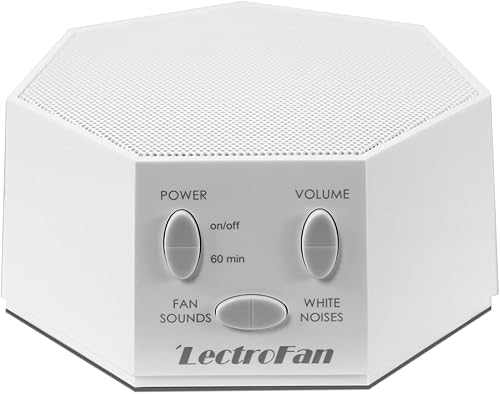
LectroFan White Noise Machine Optional tool
Generates consistent white, pink, and fan-like sounds that can mask disruptive noises during work sessions or sleep.
View on AmazonA practical sound plan for your day
You do not need a perfect playlist to get the benefits. Start with a simple structure and refine it over a week.
Morning (wake up to mid-morning)
- Wake in quiet or soft nature sounds. Avoid blasting news or chaotic music in the first minutes after waking. This gives your nervous system time to orient.
- During light movement (walk, stretch): use upbeat but not aggressive music if you enjoy it. Aim for tracks that make you want to move but still let you think.
- First deep work block: try 25–50 minutes in silence or with low-volume instrumental music. If you share space, pair this with noise cancelling headphones.
Midday (work and study)
- For complex tasks: choose instrumental, low lyrics, mid-tempo tracks.
- For admin or routine tasks: you can use more energetic music you love, because the risk of interference is lower.
- Take “sound breaks”: every 90 minutes, spend 3–5 minutes away from sound or with gentle nature recordings. This reset is like a stretch for your attention.
Evening and pre-sleep
- Turn the volume down as the sun goes down. Heavy, stimulating music late at night keeps arousal high.
- Use calm playlists or soundscapes (piano, ambient, slow acoustic) in the last hour before bed if they relax you.
- For sleep: if sudden noises wake you, try a low-volume fan sound or white noise machine rather than headphones in bed.

Bluetooth Sleep Headphones Headband Optional tool
Soft headband with flat speakers for people who like gentle music or noise at bedtime without bulky headphones.
View on AmazonStories and real life examples
Case story: the designer and the noisy office
A 38 year old product designer worked in an open plan office with constant conversations around her. By midafternoon she felt mentally “fried” and struggled to hold ideas in working memory. After testing a few options, she built a simple system:
- Noise cancelling headphones for deep work blocks.
- A short “river sound” track for five minute breaks between meetings.
- Instrumental electronic playlist for routine tasks in the afternoon.
Within two weeks she reported fewer end of day headaches, less irritation, and the feeling that she “got her brain back” during key design sessions. Her experience mirrors lab findings: reducing unpredictable speech noise and using stable sound can protect performance in demanding tasks.
Case story: learning with rhythm
A 52 year old language learner used short, daily sessions to build vocabulary. She created very simple melodies and rhythms for difficult word lists and recorded them on her phone. Listening and quietly singing the lists during walks helped her recall words more easily during lessons. This reflects research on how rhythm and melodic structure support sequence memory and learning.
FAQ & safety
Is it bad to work with headphones all day?
Headphones are not a problem by themselves. The issues are volume and fit. Keep volume at safe levels, give your ears breaks, and avoid sleeping with in ear devices that press into the ear canal. For long days, over ear designs are often more comfortable.
Does one specific frequency of binaural beats “boost IQ”?
No. Some studies report small benefits for certain tasks when people listen to specific binaural beat frequencies, but results are mixed and depend on task details. Think of binaural beats as an optional tool for focus periods, not a magic upgrade.
Is silence always best for deep work?
Silence works best for many people, especially on reading and writing. But if your environment is noisy, a consistent, low complexity sound (instrumental music or white noise) plus noise cancelling can be better than unpredictable speech and sudden sounds.
Can music replace therapy or medication for depression or anxiety?
No. Music and sound routines can support mood and make other treatments work better, but they do not replace professional care for clinical conditions.
References (scientific sources)
- Zaatar MT, et al. The transformative power of music: Insights into the human brain. 2023. Open access review on how music practice and listening influence attention, working memory, mood, and brain networks. Available at: https://pmc.ncbi.nlm.nih.gov/articles/PMC10765015/
- Cheah Y, et al. Background Music and Cognitive Task Performance: A Systematic Review of Task, Music, and Population Impact. 2022. Systematic review summarizing how background music affects different kinds of tasks and people. DOI and full text: https://journals.sagepub.com/doi/10.1177/20592043221134392
- Taheri S, et al. Investigating the effect of background music on cognitive and motor performance. 2022. Working memory and skill performance under music vs. control conditions. PubMed: https://pubmed.ncbi.nlm.nih.gov/35253719/
- Chee ZJ, et al. The effects of music and auditory stimulation on autonomic, cognitive, and attentional processes. 2024. Review of how music and sound influence arousal and cognitive performance. ScienceDirect: https://www.sciencedirect.com/science/article/pii/S0167876024000321
- Beauchene C, et al. The Effect of Binaural Beats on Visuospatial Working Memory Performance and Cortical Connectivity. PLOS One. 2016. Shows a 15 Hz binaural beat condition improving accuracy and modifying brain network connectivity. Full text: https://journals.plos.org/plosone/article?id=10.1371/journal.pone.0166630
- Rakhshan V, et al. Effects of the Alpha, Beta, and Gamma Binaural Beat Brain Stimulation on Cognitive Performance. 2022. Explores how different binaural beat frequencies influence working memory and attention. PMC: https://pmc.ncbi.nlm.nih.gov/articles/PMC9153928/
- Sumerjana K, et al. Positive Effects of Binaural Music on the Brain. 2024. Conference paper summarizing short term memory and recall effects of binaural music. PDF: https://eproceeding.isibali.ac.id/index.php/bbw/article/download/505/306
- Jahncke H. Open-plan office noise: Cognitive performance and restoration. 2011. Experimental study of different noise levels in a simulated open plan office and their influence on performance and recovery. Abstract: https://www.sciencedirect.com/science/article/abs/pii/S0272494411000429
- Mueller BJ, et al. Using active noise-cancelling headphones in open-plan offices: effects on cognitive performance and wellbeing. Frontiers in Built Environment. 2022. Tests whether active noise cancelling improves recall performance and subjective wellbeing in office noise. Full text: https://www.frontiersin.org/articles/10.3389/fbuil.2022.962462/full
- Lin HM, et al. Slower tempo makes worse performance? The effect of musical tempo on processing speed and cognitive performance. Frontiers in Psychology. 2023. Discusses how musical tempo shapes processing speed and cognitive outcomes. Full text: https://www.frontiersin.org/articles/10.3389/fpsyg.2023.998460/full
This article is for informational purposes only and does not replace professional medical or psychological care. Always consult your healthcare provider about diagnosis, treatment, and the safe use of any devices or routines that affect your health.


