The Overthinking Trap: Why Your Brain Gets Stuck — And How to Break the Loop
Your body is tired, but your brain will not stop. You replay conversations, imagine worst case scenarios, and run the same “what if” again and again. That is overthinking — and it is exhausting. The good news: there are clear reasons your brain does this and concrete ways to step out of the loop.
Goal: by the end of this article, you will understand what keeps overthinking going and have a realistic, science-informed plan to calm the loop and move forward.
- What overthinking really is (and what it is not)
- Why your brain gets stuck: the science of mental loops
- Common overthinking patterns that drain your energy
- How to break the loop: tools that actually help
- A daily “anti-overthinking” routine you can start this week
- Real world stories & public examples
- FAQ & safety
- References (scientific sources)
For everyday overthinkersScience-informed, not clinical advicePractical & realistic
What overthinking really is (and what it is not)
Overthinking is not the same as being intelligent, careful, or “deep”. From a psychology standpoint, what most people call overthinking is usually one of two things:
- Rumination: repetitive thoughts about past events, mistakes, or losses ("Why did I say that?" "What if I had…").
- Worry: repetitive thoughts about possible future threats or problems ("What if I fail?" "What if something goes wrong?").
Both rumination and worry are loops: your mind circles around a topic without moving to problem solving or acceptance. Studies link high levels of rumination and worry to more anxiety, lower mood, and poorer sleep. Over time, this pattern can change how reactive your stress systems are.
Why your brain gets stuck: the science of mental loops
Your brain is built to predict. It constantly asks: "What might happen next?" and "Was that safe?" In a healthy range, this prediction system helps you plan, learn, and avoid danger. In overthinking, the system gets stuck on "threat" and "mistake" and stops updating.
Default mode network and rumination
Brain imaging research points to a set of regions called the default mode network (DMN), active when your mind is not focused on an external task. In people who ruminate a lot or have depression, DMN activity is often higher and more rigid. This does not mean you are broken; it means your brain has become very good at running certain internal storylines.
Stress, cortisol, and narrow thinking
When you feel threatened, your body releases stress hormones like cortisol. Short bursts can sharpen focus. But chronic stress narrows your thinking, pushes you toward black and white judgments, and makes it harder to see nuance or solutions. That is a perfect recipe for loops like "Everything will go wrong" or "I always mess up".
Research on cognitive therapy shows that when people learn to question over-generalized, repetitive thoughts and shift attention to present tasks, activity patterns in networks like the DMN change over time. Your brain wiring is plastic — even after 40 — which means overthinking can be softened with consistent practice.

The Five Minute Journal Optional tool
A simple, structured journal that helps move thoughts out of your head and onto paper, shifting focus toward gratitude and action instead of loops.
View on AmazonCommon overthinking patterns that drain your energy
Overthinking rarely feels like "I am overthinking". It feels like "I am being realistic" or "I am trying to make sure nothing goes wrong". Here are some patterns that quietly keep the loop alive:
1. What if… what if… what if…
Endless "what if" chains pretend to be planning, but they usually do not end in a concrete decision. They create the illusion of control without action. Studies on worry show that this style of thinking maintains anxiety instead of resolving it.
2. All or nothing thinking
When your brain is stressed, it loves extremes: "If this presentation is not perfect, it is a disaster." This kind of thinking removes the middle ground where realistic options live, and it strongly predicts rumination and low mood.
3. Mind reading and fortune telling
You assume you know what others think ("They must think I am incompetent") or that you know the future ("This will never work"). Experiments in cognitive psychology show that these thinking styles are common in anxiety and depression — and they are almost always biased toward negative guesses.
4. Replaying the past to find the perfect version
You mentally rewind conversations or events to find the "correct" words or action, as if that could change the past. This behaviour is linked to higher levels of depressive rumination. It does not change what happened; it only deepens the groove of self criticism.
How to break the loop: tools that actually help
Breaking overthinking is not about "stopping thoughts" (that usually backfires). It is about changing your relationship with them and giving your brain different tasks and inputs. Below are tools that have support in research on worry, rumination, and stress.
1. Externalize: move thoughts from mind to paper
Writing out worries or repetitive thoughts can sound too simple, but it changes the context. Studies on expressive writing and "worry exposure" show that structured writing about concerns can reduce anxiety and rumination over time. Once thoughts are on paper, you can sort them into "things I can do" and "things I cannot control".
2. Time box your worry
Paradoxically, giving worry a clear time slot (for example, 15 minutes at 5 pm) and postponing intrusive worry until then has been tested in clinical settings. This technique — sometimes called "stimulus control for worry" — helps keep loops from taking over the whole day.
3. Shift from "why" to "what now"
Rumination loves "why" questions ("Why am I like this?" "Why did this happen?"). Problem solving uses "what" and "how" questions ("What is the next small step?" "How can I test a different approach?"). Cognitive therapy trials show that coaching people to ask more concrete "what" questions reduces rumination and improves mood.
4. Body first: use physiology to slow the loop
It is extremely hard to think differently when your body is in "alarm" mode. Slow breathing (for example, 4 seconds in, 6 seconds out) for even 5 minutes can reduce physiological arousal. Studies on paced breathing and heart rate variability show improvements in anxiety and stress when practiced regularly.

Breathing Necklace for Slow Exhale Optional tool
A small metal breathing tool that encourages longer exhales, helping to calm the nervous system during spikes of overthinking.
View on Amazon5. Mindfulness: notice thoughts, do not fuse with them
Mindfulness based approaches teach skills like noticing thoughts as passing events, instead of facts or orders. Randomized trials of mindfulness based cognitive therapy show that it reduces depressive relapse and rumination by helping people step back from their thoughts.
You do not have to sit for an hour. Even 5–10 minutes of guided practice — bringing attention to breath or body sensations and gently returning when the mind wanders — trains your brain in "unhooking" from loops.
A daily “anti-overthinking” routine you can start this week
You do not need to apply every tool at once. Start with a small daily structure and layer from there. Think of this as strength training for your attention and self compassion.
Morning (set the tone instead of checking your phone)
- Before screens: take 3 slow breaths and notice how your body feels. Name one thing you are grateful for or looking forward to, even if it is small.
- 2 minute "brain dump": write down any big worries or to dos swirling in your mind. Tell yourself: "I will come back to this on paper later, not in my head all day."
- Movement: 5–10 minutes of walking, stretching, or light exercise. Physical movement helps shift you out of pure mental mode.
Workday (moving from loops to actions)
- Pick 1–3 priorities: instead of thinking about everything at once, choose the next specific step you can take.
- Use a timer: 25 minutes focused on one task, 5 minutes break. When overthinking shows up ("This is not good enough"), write the thought on a note, then gently return to the task.
- Short breathing reset: once or twice per day, take 3–5 minutes to slow your breathing. Pair it with standing up and changing your visual focus (look at something far away).
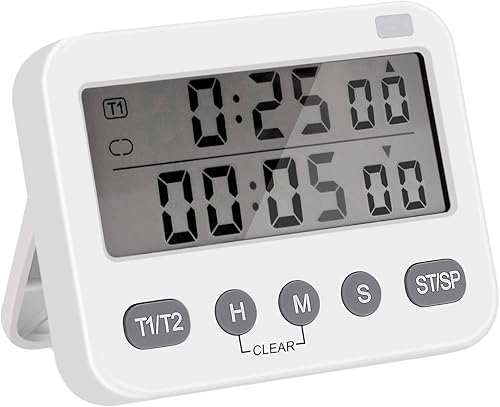
Visual Pomodoro Focus Timer Optional tool
A simple visual timer that lets you focus in short sprints, instead of endlessly thinking about starting.
View on AmazonEvening (closing the loop)
- Worry time: if your mind loves to start looping at night, schedule a short "worry session" 1–2 hours before bed. During that time, write down worries and ask: "Is there an action here?" If yes, note the smallest step and when you will do it. If not, practice saying: "This is out of my control tonight."
- Gratitude & wins: list three things that went okay or that you handled, even if they were small. This trains your brain to notice evidence that is not purely negative.
- Wind down without extra input: in the last 30 minutes before bed, avoid heavy news or social media. Your brain does not need more material to chew on.

YnM Weighted Blanket Optional tool
Some people find that gentle, even pressure from a weighted blanket helps them feel calmer at night, which can reduce the chance of spiralling thoughts in bed.
View on AmazonReal world stories & public examples
A high performer who lived in her head
Consider a common story: a successful professional in her forties who lies awake at night replaying meetings, emails, and imagined future conflicts. She reads every "sign" from her boss, worries that one imperfect presentation will ruin her career, and mentally argues with people who are not there.
After finally reaching out to a therapist, she learns about rumination and worry. Together they practice:
- Scheduling daily "worry time" instead of letting it take over the night.
- Using a journal to separate "problems I can act on" from "things I cannot control".
- 10 minute mindfulness sessions with an app to notice and unhook from thoughts.
Within a few months, she still has difficult days, but the loops feel less sticky. She falls asleep faster and spends more time in her actual life than in "movie trailers" in her head. Her changes mirror what research sees when people use cognitive and mindfulness based tools: rumination scores drop, and quality of life improves.
Public example: athletes and nervous thoughts
Elite athletes openly talk about performance anxiety and overthinking under pressure. Many describe how working with sports psychologists taught them to bring attention back to specific actions (breath, posture, next move) instead of sitting in "what if I lose" loops. This kind of attentional training is essentially anti overthinking training: thoughts are noticed and allowed, but behaviour follows a chosen plan, not every mental story.

Mindfulness Meditation App Optional tool
Guided mindfulness sessions (5–15 minutes) can train you to observe thoughts without getting pulled into every story — a core skill in breaking overthinking loops.
Explore optionsFAQ & safety
Is overthinking the same as having an anxiety disorder or depression?
Not always. Overthinking — rumination and worry — is a common habit. It can show up in people with no diagnosis and also in those with anxiety or depression. If your thoughts come with strong physical symptoms, long lasting low mood, or impact your ability to function, it is important to talk with a qualified professional.
Can I fix overthinking just by "thinking positive"?
Probably not. Simply trying to replace every hard thought with a positive one often turns into another form of overthinking. More helpful strategies involve accepting that some thoughts will show up and choosing actions and focus anyway.
What if journaling makes me feel worse?
For some people, unstructured writing can become another loop. If journaling makes you more stuck, try shorter, structured prompts (for example, "3 things that went okay today", or "1 problem and 1 next step") or focus more on body based tools like breathing and movement.
Should I use supplements for overthinking?
Some supplements (like magnesium or certain herbal products) are marketed for "calm", but research is mixed and individual responses vary. They can sometimes help as part of a broader plan, but they are not a replacement for therapy, lifestyle changes, or medical care. Always check with a clinician before starting anything new, especially if you take medication.
References (scientific sources)
Below are research articles and reviews that informed this article. They are scientific sources (PubMed, PMC, peer reviewed journals), not blogs.
- Nolen Hoeksema S. The role of rumination in depressive disorders and mixed anxiety/depressive symptoms. J Abnorm Psychol. 2000. PubMed:
- Hamilton JP et al. Default-mode and task-positive network activity in major depressive disorder: implications for adaptive and maladaptive rumination. Biol Psychiatry. 2011. PubMed:
- Watkins ER. Constructive and unconstructive repetitive thought. Psychol Bull. 2008. PubMed:
- Segerstrom SC, Stanton AL. Maladaptive versus adaptive self focus in anxiety and depression: a replication and extension. Cognit Ther Res. 2013. PMC:
- Thayer JF et al. A meta analysis of heart rate variability and neuroimaging studies: implications for heart rate variability as a marker of stress and health. Neurosci Biobehav Rev. 2012. PubMed:
- Segal ZV, Williams JMG, Teasdale JD. Mindfulness Based Cognitive Therapy for Depression. (book summarizing MBCT trials and mechanisms of reduced rumination.) Overview: PMC
- McEvoy PM, Watson H. The impact of worry, rumination, and negative problem orientation on quality of life in anxiety and depression. Br J Clin Psychol. 2013. PubMed: PubMed:
- Borkovec TD, et al. Stimulus control for worry: a component of cognitive behavioral treatment for generalized anxiety disorder. Described in trials of CBT for GAD. Summary article: PubMed
- Grossman P et al. Mindfulness based stress reduction and health benefits: A meta analysis. J Psychosom Res. 2004. PubMed: PubMed:
This article is for informational purposes only and does not replace professional psychological or medical care. If overthinking comes with strong distress, long lasting low mood, or thoughts of self harm, please seek help from a licensed professional or emergency service in your area.


